Breakpoints

No Retina
Retina
XS Screen (480px)
SM+ Screen
SM Screen (768px)
SM- Screen
MD+ Screen
MD Screen (992px)
MD- Screen
LG+ Screen
LG Screen (1200px)
LG- Screen
XL+ Screen (1600px)
Author Image
Coaches Education
Author Location
Park City, UT

USSA Sport Education Coaches Tip of the Week: June 25 2013

By Coaches Education
June, 25 2013

Each week the USSA Sport Education Department will post a Coaches Tip of the Week.  The information will rotate through the ski and snowboard disciplines so check back each week to see the newest tip! 

Effective and Skillful Coaching: Applying the CAP Model
{This is an excerpt taken from the 2013 Spring Alpine Coaches Academy presentation by Stacey Gerrish}

Effective and skillful coaching can help develop your athlete’s confidence, self-esteem, safety and well being, and communication skills leading to more success as ski racers.  Your coaching also has an impact on the ability of your athletes to self-direct, (a valuable skill set on race days).

Effective Coaching

Effective coaching can take many forms and includes the consideration of all aspects of development in the CAP model.  

Characteristics of effective coaching include:

•    Playfulness and relevance to the athletes age, cognitive development, affective needs, goals and motivations
•    Technical improvement happening seamlessly
•    Opportunities for the athletes to have experiences that exert positive impacts on learning and avoid negative impacts
•    Employs ALL learning styles

Skillful Coaching

Coaching isn’t only about knowing how to go left and right.  To be skillful in the true art of coaching you need to understand learning theory and how to apply this knowledge to create valuable learning experiences for athletes.  An interesting way to incorporate all learning styles and the CAP development model is the use of a skill based "passport".  Athletes receive a passport at the beginning of the season and as they complete a training session or SkillsQuest evaluation they get a stamp in their passport.  This allows each athlete to feel a sense of accomplishment but allows them to learn according to their own style and pace.

Coaching Style

What words would your athletes use to describe you as a coach?  It is important for coaches to consider their coaching style and how that is impacted by their learning style.  How would you describe your coaching style?  Some elements of an effective and skillful coaching style include:
 
•    Being confident
•    Understanding the power of your words
•    Speaking to students respectfully
•    Having a sense of humor
•    Being fair
•    Being prepared
•    Being inspiring and motivational
•    Being professional
•    Using stories – stories create emotional connections with your athletes

Keep athletes coming back!

Sounds simple right?  Your coaching style and approach to teaching can help retain athletes in your programs and encourage others to join.  Here are some tips on how to keep athletes coming back based on this month-long series of coaching tips:

•    Care – no one cares what you know, until they know that you care
•    Positive atmosphere – create it and maintain it
•    Empower your athletes
•    Adapt your coaching style to meet your athletes’ needs
•    Set goals for both the team and individuals within the team
•    Catch your athletes doing things right and be quick to praise them for it
•    Preserve your athletes’ dignity
•    Model, monitor and encourage respect
•    Show your athletes that you possess something special; inspire them to learn from you!

Did you miss a part of this great series?  Check them out here: Part 1, Part 2, Part 3, and the PDF version of Part 4
 

USSA Sport Education Coaches Tip of the Week: June 18 2013

By Coaches Education
June, 18 2013

Each week the USSA Sport Education Department will post a Coaches Tip of the Week.  The information will rotate through the ski and snowboard disciplines so check back each week to see the newest tip! 

Coaching the Whole Athlete: The CAP Model
Part 3: Physical Development
{This is an excerpt taken from the 2013 Spring Alpine Coaches Academy presentation by Stacey Gerrish}

This will be a three part series focusing on one area of development each week.

A child's physical development often makes efficient, effective, "ideal" movements difficult.  It is crucial for coaches to understand the physical development of a human to effectively coach new movements and avoid frustration.  Physical development or lack thereof, is not a reason for children to ski poorly.  Physical development is a guideline to help with analysis and targeting of desired movements.  A child's movements need time and experience to develop coordination and muscle strength.

As an athlete develops physically here are a few things to keep in mind when providing feedback.

Physical Development – Ages 7-11
•    Have the ability to move upper body in opposition to lower body
•    Completely developed gross motor movements and cross lateral movements
•    Well established fine motor movements
•    Still experiencing growth spurts
•    Interest in rehearsing/practicing to achieve perfection
•    Beginning to develop more refined coordination
•    Vision is still developing

Physical Development – Ages 12+
•    They can be fully physically developed
•    Muscular strength is increasing
•    Joints and bones may be weak during growth spurts
•    Hormonal imbalances can affect performance and attitude
•    Vision is fully developed
•    Can do multi faceted skill drills

Coaches should understand the limitations and abilities of the physical development of their athlete and be creative in helping them to understand proper movement patterns.  Keep physical development in mind when giving feedback.  For example, vision is still developing until around age 13, therefore visual cues and feedback are not as valuable before age 12-13 as they are after.  

Tailoring your coaching to involve all aspects of the athlete's development will help you to be more successful as a coach!

Check back next week for How a Coach's Learning Style Influences their Coaching Style.

Part 1

Part 2

PDF Copy of Part 3
 

USSA Sport Education Coaches Tip of the Week: June 11 2013

By Coaches Education
June, 11 2013

Each week the USSA Sport Education Department will post a Coaches Tip of the Week.  The information will rotate through the ski and snowboard disciplines so check back each week to see the newest tip!

Coaching the Whole Athlete: The CAP Model
Part 2: Affective Development
{This is an excerpt taken from the 2013 Spring Alpine Coaches Academy presentation by Stacey Gerrish}

This will be a three part series focusing on one area of development each week.

Coaches need to satisfy the affective or emotional needs to connect with their athletes and to enhance their motivation level.  Affective development includes how individuals feel about themselves and their interactions with others.  Self-identity is largely shaped by social interactions.  In addition, the development of moral values is closely tied to the development of self-identity.  

There are several affective traits and indicators of a child's needs. Some of these include:

•    Internal beliefs and values (intrapersonal)
•    Teamwork and sportsmanship (interpersonal)
•    Identity and self-esteem
•    Humor
•    Play, rules and competition (social interaction)
•    Moral values

Affective development progresses as an athlete develops and grows.  Children have a wonderful ability to find humor in things most adults don't view as funny at all.  If presented with information in a fun, creative way, and then encouraged to demonstrate their understanding in a light-hearted manner, the child is more likely to retain the concept and be receptive to more of the same.

Coaches behaviors influence learning and performance in their athletes.  It is important for coaches to make an effort to understand how their athletes think and feel about themselves, others and the world.  Coaches should carefully introduce competition and play in training sessions.  Be careful to use humor and not sarcasm.  Sarcasm can be devastating and may ruin the experience for the athlete.

Play, rules and competition
Play is fun and critical to the learning process.  Between the ages of seven and eleven, athletes become interested in results as well as participation.  At this age range, drills and tasks have better results if structured in a game format and involve everyone all the time.  Drills should be focused on a common goal.  Outcomes and rules can be externally motivating when the desire is to please others in the group.  After the age of 12, competition is a way to evaluate self-improvement and will enhance intrinsic motivation.  Athletes over the age of 12 are able to notice self-improvement and recognize feelings of success.  

Peer Pressure
Moral values are closely tied to self-identity.  After the age of 12, peer pressure plays a big role in behavior.  Good and bad are determined by socially agreed upon standards.  Kids are searching for the identity and acceptance that comes from the group.  The challenge with this age group is to maintain group dynamics.  As children mature, their morals shift from pleasing others to what is valued by self. 

Creating the environment for affective growth
The affective or social-emotional environment helps enhance children's positive feelings about themselves and can inspire them.  It is crucial to the learning process for coaches to create a positive environment for growth.  Emotion drives attention which in turn drives learning and memory.

Check back next week for Part 3 of the CAP Model, physical development.

Missed Part 1?  Check it out here.

PDF Copy of Part 2
 

USSA Sport Education Coaches Tip of the Week: June 4 2013

By Coaches Education
June, 4 2013

Each week the USSA Sport Education Department will post a Coaches Tip of the Week.  The information will rotate through the ski and snowboard disciplines so check back each week to see the newest tip!

Coaching the Whole Athlete: The CAP Model
Part 1: Cognitive Development

{This is an excerpt taken from the 2013 Spring Alpine Coaches Academy presentation by Stacey Gerrish}

This will be a three part series focusing on one area of development each week.

The CAP model consists of three developmental areas: cognitive, affective, and physical.  This model helps coaches understand and set appropriate expectations for each athlete and their parents.  Each area of the model is progressive, moving with the athlete as they develop.  The areas also encourage coaches to observe athletes, define their abilities, and coach to these findings.  Coaches should also keep in mind that all people develop at different rates in each of the three areas and that development should dictate behavior and coaching content.

When coaching, we need to deliver material appropriate to the athlete's stage of thinking to produce the desired motor response and skill development.  Common indicators of cognitive development include: ability to follow directions, spatial and visual abilities, logical and mathematical abilities, ability to process specific concepts and verbal-linguistic abilities.

Ability to Follow Directions

A child's ability to follow directions is based on where their development is with respect to three mental processes:

•    Reversibility: the process of turning directions or thought processes backwards
•    Laterality: the preference we show for one side of our body over the other
•    Directionality: includes and understanding of what is "left" or "right" for another person

In order to maximize effectiveness, coaches should keep instructions simple. Focus on one thing at a time.  Most people tend to focus on the last thing they hear. The timing of instructions to athletes is important. It is best to give feedback before or after an activity, not while they are in the process of completing the activity.  Keep in mind that the athlete's mental circuit breaker is easily overloaded!

How do we learn?

Howard Gardner proposed eight distinct learning styles (see below).  We all know the world through all eight; however, the strength and the way in which each athlete combines the intelligences to solve problems can help the coach devise strategies as to how best to reach each an individual.

The Learning Styles

•    Visual-Spatial: Think in terms of physical space, aware of their environments. They can be taught through drawings, verbal and physical imagery.
•    Bodily-Kinesthetic: Use the body effectively. Keen sense of body awareness. They can be taught through physical activity.
•    Musical: Show sensitivity to rhythm and sound. They can be taught by turning lessons into lyrics, speaking rhythmically and tapping out time.
•    Interpersonal: Understanding of interacting with others. They learn through interaction and group activities.
•    Intrapersonal: Understanding one's own interests and goals. They tend to shy away from others. They can be taught through independent study and introspection.
•    Linguistic: Uses words effectively. These learners have highly developed auditory skills and often think in words. They can be taught by encouraging them to say and see words.
•    Logical-Mathematical: Use reasoning. They are calculating. They think conceptually, abstractly, and are able to see and explore patterns and relationships. They can be taught through logic and investigation. They need to learn from concepts before they can deal with details.

An investigation of an athlete's cognitive development can reveal how they use each component of intelligence to think or process information, what types of things they enjoy doing, and what coaching strategies you should use to meet their needs. Athletes are letting you know through their behavior how they learn. Take a look at what they are doing between runs or drills. Most likely, word-smart kids will be talking, picture-smart kids will be doodling in the snow, people-smart kids will be socializing, and the body-smart kids will be fidgeting.  

Coaching a group of young athletes that most likely have several of the learning styles represented can be difficult.  These are some tools you can use to effectively engage multiple learning styles:

1.    Visuals
2.    Printed words
3.    Sound
4.    Motion – to depict human performance so the learner can copy your movements
5.    Color
6.    Tangible real objects (not models) are useful to teach motor and cognitive skills
7.    Instructional setting – provide corrective feedback for individual athletes
8.    Figure out which learning style each of your athletes uses most, every athlete is different!
9.    Reading ability – use pictures for poor readers and texts for good readers
10.    Performance – practice the task, which sets the stage for reinforcement

Here is a PDF Copy of Part 1: Coaching the Whole Athlete: The CAP Model Part 1: Cognitive Development

Check back next week for Part 2 of the CAP Model, affective development.
 

2013 Club Excellence Conference Recap

By Coaches Education
May, 29 2013

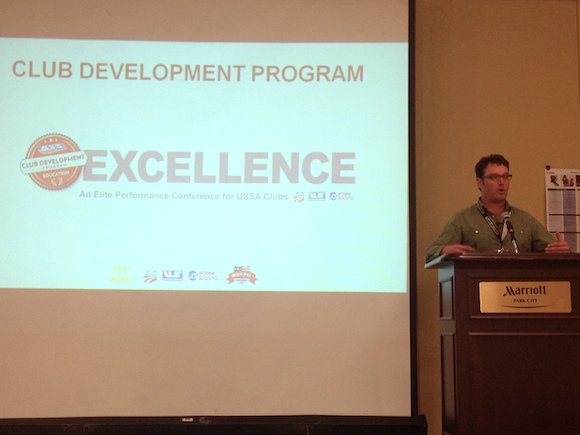
The following is a recap of the 2013 USSA Club Excellence Conference by Brian Krill, the new Club Development Manager for the USSA. This conference took place May 14-15 in Park City, UT.

The message was loud and clear from the start, highlighted by the opening address by USSA Executive Vice President of Athletics, Luke Bodensteiner, that the culture of USSA is shifting more and more to one of a club-based organization. He explained this would result in the following priorities and initiatives:

  1. Clear, consistent approach to athlete development at all phases
  2. Optimal coaching at all levels
  3. Club performance measured against consistent standards
  4. Fun, safe and satisfying development experiences, with opportunities for athletes to reach their full potential
  5. Shared culture

The remainder of the conference, through multiple presentations and discussions, focused on the different ways we can all accomplish this. Certainly, the results of the McKinsey and Company study conducted during the past season were referenced throughout the conference, and presented at the conference. The recommendations of that study are pointed at these very objectives. The presentations focused on the opportunities and strategies that both USSA and its member clubs can pursue to offer a better experience, and improve performance for athletes, parents, coaches and clubs.

Tom Kelly, the USSA Vice President of Communications, opened with a discussion of Olympic memories in his presentation Sochi 2014: Marketing Opportunity for USSA Clubs. He stressed the fact that we all have an Olympic memory, and our nation truly comes together around the Olympics. Other nations have an advantage in the sense that their snowsport athletes enjoy the fame of our basketball, baseball and football stars year-round, every year not just during the Olympics. He laid out the importance of using the Olympics this fall and early winter as a marketing boost for recruiting new athletes and creating excitement and engagement with existing athletes, volunteers and families. We are involved in Olympic sports, and we should use that to our advantage.

He suggested that in the run-up to the Olympic Winter Games, clubs get engaged with a fall-to-February marketing campaign that includes partnering with local resort(s), piggybacking with existing special events both locally and internationally, such as FIS World Snow Day on January 14, 2014. Making visits to local schools and getting local media involved with the Olympic hype will also be a good way to help generate participation and ride on the Olympic excitement. There are other significant opportunities that Tom and USSA will be helping coordinate and offer to all member clubs. USSA has partnered with NBC to broadcast the NBC Gold Map and the NBC website which will be viewed by approximately 200 million and 100 million respectively. This project will map out how kids and parents can get involved with competitive snowsports and drive up participation numbers in your clubs. Also, USSA will be coordinating USSA National Club Day on Saturday, February 15, during the heart of the Olympic competitions. This will be a great time to host an open house, an Olympic broadcast viewing, and a recruitment effort at your club. All member clubs will be receiving a toolkit later this summer and early fall to help capitalize on all these marketing opportunities.

Next we heard from Lester Keller, PhD, the USSA Sport Psychology Coordinator and Alpine Regional Development Director, about What Parents Want from a Ski & Snowboard Club. In this presentation, Lester emphasized his and others research. He went over current research about what parents expect when enrolling their children in our clubs, and he laid out what research says about why kids want to be involved.  Children want to have fun and enjoy themselves, get better at some tasks and seek competence, and affiliate with, make friends, and do things together with those friends.  Parents act as initiators, instigators, enablers (the good kind), supporters and motivators. Looking at this research together it is apparent that the old saying is true that when you enroll a kid, you enroll a family. In this sense, the research supports the concept of the performance team which is made up of the athlete, the coach/club and the parent.  As we shift to a club-based model, each club is encouraged to also shift to a parent-based model.  Parents initiate, motivate, and support their children doing these spots to strengthen their family and its values, and to emphasize the importance of the life skills they teach.  In the end, Lester emphasized that one of our advantages is that skiing and snowboarding are lifelong sports, and families can literally participate together in a multi-generational fashion, sharing the love of the sport, visiting resorts, and ultimately feeling like they are good parents. Lester stressed the importance of hosting a parent orientation session, encouraging parent engagement, and better supporting our main clients the parents.

Jina Doyle and Marla Peters with American Specialty Insurance (ASI) spoke regarding how clubs can best assess their insurance needs to ensure that they have enough coverage, but not too much, or coverage that simply is not needed. More importantly, they focused on the fact that the most important aspect of drafting contracts with employees, partner resorts, event organizers, etc. lies in where the liability is pointed and the fine print. USSA in partnership with ASI will be taking a more active role in helping its member clubs review contracts to be sure that they are not exposed to more liability than they should be.

Tom Avischious the Field Services Director for USA Swimming delivered the keynote address after a wonderful sit down dinner. His presentation entitled You Want Me To Do What? provided a look into the future for what a full-scale club development and recognition program looks like. Over the last ten years, USA Swimming has created what is now a department of five full-time staff who work directly with clubs across the country. Similar to where USSA is going with its club certification, the USA Swimming model assesses four major component areas: business and organizational success, leadership and planning, parent and volunteer development, coach development and education, and athlete development and performance. Taking this approach, USA Swimming has seen numerous benefits to its member clubs and organization including increased success at the Olympic level. Offshoots of this club development program include highly developed certification and recognition levels for clubs, grants made directly to clubs to recognize performance, and innovative programs such as virtual swim meets and the I.M.Xtreme Challenge. While he was honest about some of the challenges such as the time it takes to complete the certification process, the buy-in, and the cost to the organization to create such a full-scale program, he was clear about the overall success of the program to the extent that similar programs are now being implemented at the level of the local swim committees.

The second day of presentations was kicked off by Zak Pendleton, the Eligibility Coordinator for the University of Utah. In his presentation, NCAA Eligibility: From High School to College Student-Athlete, club leaders learned how to better prepare their athletes for eligibility in an NCAA program. Zak explained the basic academic requirements for eligibility, and how to best navigate the hot button issue for many athletes the receipt of prize money. The presentation also addressed on-line schooling and alternative academic programming and how these options may or may not fit the bill when it comes to NCAA eligibility requirements.

Matt Terwillegar, the Sport Manager at the Utah Olympic Park, gave numerous examples about how incorporating a long-term athlete development model into ski and snowboarding programs increases both participation and performance. His presentation, Incorporating LTAD into Ski and Snowboard Programming, gave an overview of how the Utah Olympic Park is dedicated to using the advantages of the Olympic legacy to create a healthy pipeline, age-appropriate programming, and innovative facilities.

In the Clubs Raising the Bar panel discussion, we heard from four club leaders. Matt Gnoza, of Killington Mountain School, is working on an exciting project to increase trail space and venues for competitive snowsports, as well as expanded facilities that will serve both Killington Mountain School and the Killington Ski Club. John (JC) Cole, Ski and Snowboard Club Vails (SSCV) Human Performance Director, walked through how SSCV has been successful using what started as 800 square feet of extra space as a catalyst to create a full-scale weight room and athletic training/testing facility and a new equipment tuning operation for SSCV athletes. Walt Evans, Aspen Valley Ski and Snowboard Clubs Director of Excellence, spoke of the monumental projects going on in Aspen: big air bags, small air bags, and supertramps! Complete with exciting footage of the new apparatus and pictures of current and future plans, it is clear Walt is helping to raise the bar in Aspen. Finally, Whitney Childers spoke on behalf of Bill Kerig about RallyMe, an easy and ready-to-use online fundraising tool that can be used by individual athletes or clubs. Every club should check out this program and its great capacity at www.rallyme.com.   

The conference closed with a report from Lynn Dorsey Bleil, Director at McKinsey & Company, which explained the findings and primary recommendations resulting from an critical evaluation of USSA from the perspective of many club leaders, parents, coaches and athletes. The full report can be viewed at on the USSA website.  After Lynns report Jon Nolting, USSA Sport Education Director, and Brian Krill, USSA Club Development Manger closed in explaining the plans being laid for club and coach support and development. The newly established Club Development Program directly addresses many of the recommendations indicated in the McKinsey study, including a more hands-on approach with the member clubs building value for member clubs, clear certification and recognition criteria for clubs, and more professional resources and communication flowing directly to clubs. 

As a newcomer to USSA (as an employee) it has been both exciting and refreshing to see the direction the organization and its many partners are going. Thanks to all the speakers and presenters who made this conference such a success.

To access the powerpoint slides presented as well as the video recordings from selected presentations, go to http://ussa.org/global/club-conferences-seminars-and-clinics.

Download a printer-friendly copy of this recap here.

USSA Sport Education Coaches Tip of the Week: May 28 2013

By Coaches Education
May, 28 2013

Each week the USSA Sport Education Department will post a Coaches Tip of the Week.  The information will rotate through the ski and snowboard disciplines so check back each week to see the newest tip!

Takeoff and Landing in Freestyle Aerial Skiing
{This is an excerpt taken from the USSA Level 100 Aerial presentation written by Chris Seeman}

Teaching a young athlete a strong takeoff with proper mechanics is a skill that will support them the rest of their acrobatic skiing career.  This skill is the basis for many advanced acrobatic maneuvers.  

The skill is made up of two basic maneuvers:

  1. As the athlete approaches the jump, their feet should be shoulder width apart (athletic stance). The shoulders need to be forward over the balls of the feet.  Hands should be reaching toward the top of the jump.  Vision should be focused above the jump, at or near the horizon.
  2. When the athlete begins to ride up the jump, their body needs to extend or "pop" with full extension at the end of the jump. It is important that the shoulders remain over the balls of the feet through full extension. The extension can have as much "explosiveness" as the athlete is able to generate, while remaining in balance.

Once the take off skill is performed consistently, the athlete can move on to other maneuvers.  For non-rotational maneuvers the athlete should wait until they leave the jump before they begin the maneuver they are performing.  During the maneuver make sure the athlete keeps their vision level with the horizon through the apex of the jump.  

As the athlete begins to prepare for the landing, the athlete needs to reach down the landing area with their hands and shift their vision to the bottom of the landing area.  A slight absorption and balanced four point landing is ideal.     
 

PDF copy of this week's tip

Alpine U16 National Championships Recap

By Coaches Education
April, 19 2013

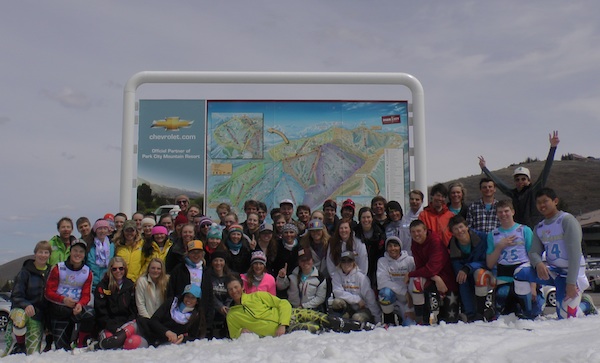
The 2013 U16 National Championships featured racing, testing and education for the top ten alpine boys and girls from each region. Understanding that at this age and developmental phase there are still many aspects that are developing that will be factors in the athlete's long-term potential, the event went beyond just race results in determining a champion. Overall results were based on their performance in GS, slalom, parallel, SkillsQuest, and a technical freeski assessment. In addition, the athletes underwent physical testing and a medical screening, learned about mental strength training from one of USSA's sport psychology consultants and had a chance to talk with U.S. Ski Team coaches. Said USSA Alpine Director Patrick Riml, "I think it's the greatest event to see all these kids performing on different paths, freeskiing, SkillsQuest, and slalom and GS. It's not a training camp. It's a competition. So it's a test."

A test it was. It was not an easy week. Weather and snow conditions were extremely challenging, as over a foot of snow fell on the first day making for challenging conditions for the freeskiing assessment and the races. The races were held on the Olympic GS trail at Park City, a hill with extremely steep sections made more challenging by deteriorating snow. The message to the racers and coaches – don't expect conditions to always be perfect, be adaptable. Watching video of the top finishers, you'll see big mistakes and good recoveries. To win it took a high degree of skill and a lot of resilience.

"We have some really good skiers here," said Lester Keller, USSA Regional Development Director. "But we see some things that we're deficient as a nation in. These kids are in pretty good physical condition, but not good enough. So we definitely need to get the message out to the nation that we need to do a lot more work in fitness. We're working on a total athletic model, taking in different dimensions of athletic performance that are specific to alpine skiing like technique, tactics, physical fitness and conditioning, mental skills and mental strength, nutrition, and all of those things that go into it. We're just trying to ramp up the expectation so that people understand what it takes to be a world-class athlete."

Skiing events (all held at Park City Mountain Resort)

Technical freeskiing assessment 

Four challenging freeskiing assessments judged by a panel of U.S. Ski Team coaches and USSA High Performance staff on a scale of 0-10. All exercises performed on GS skis. Top finisher based on average score of the four assessments below.

  • Medium/long radius turns in moguls: Tested skiers ability to maintain balance, ski/snow contact, timing and rhythm while skiing GS radius turns on a steep mogul trail (Thaynes trail).
  • Freeski hourglass in ungroomed terrain: Tested skiers ability to continually change turn radius while maintaining balance, rhythm and flow in rough, uneven terrain (Double Jack trail). Same protocol as for SkillsQuest freeskiing assessment for phase 4, but on steep, expert, ungroomed terrain.
  • Short-swing turns: Tested the skiers ability to maintain consistent rhythm while performing a series of short swing turns in a defined corridor on a steep slope in ungroomed terrain over a long distance (Prospector trail).
  • GS-SL-GS change-up: Tested the skiers ability to manage the transition from GS turns directly into slalom turns, then directly back into GS turns again while maintaining control and not stalling their movements (Dynamite trail). Ungroomed, expert trail.

SkillsQuest skiing assessment

Testing took place in the afternoon of the technical freeskiing assessment day and following the GS race. Athletes were required to use GS skis for the assessment to increase the challenge and show their versatility. Four exercises were assessed: pole jumpers in a tuck, one ski skiing with lane changes, sideslip to straight run to sideslip, and hop turns. See the girls results and boys results in the SkillsQuest assessments.

GS race

Standard two-run scored race seeded by USSA points. Held on C.B.'s run, the Olympic GS trail. Difficult conditions due to heavy new snow over old spring snow. Technically demanding course sets by U.S. Ski Team coaches at 25-27m distances.

Slalom race

Standard two-run scored race seeded by USSA points. On GS hill, with start at top of steep 2nd pitch. Difficult conditions due to variable snow surface. Technically demanding course sets by U.S. Ski Team coaches at generally 9-10.5m distances.

Parallel race

Single qualifying run to determine seeding. Brackets of 32. Held on lower Picabo's trail. Course set at 18-20m distances. Weather light to moderate rain, rough snow. Each athlete runs red and blue course head-to-head, with differential timing. The parallel has in both years brought out a different level of racing. Racers learn a lot about their limits and tend to race more instinctually. At this type of event, parallel racing is fun, exciting and emphasizes versatility, resilience and competitiveness.

Final results

40% based on skiing assessments, 60% based on racing, with the technical freeski assessment, SkillsQuest, GS, slalom and parallel each counting for one-fifth of the total score. Athletes ranked in each event and awarded World Cup points based on rank. In order to win the U16 National Championships, skiers must have both a high degree of speed and broad skiing skills. The USSA believes that these factors together give a better overall sense of a ski racer's future potential than just speed or skills alone. See the overall results below.

GIRLS RESULTS

BOYS RESULTS

View video from the top finishers at the event here.

USSA Sport Education Coaches Tip of the Week: April 18 2013

By Coaches Education
April, 18 2013

Each week the USSA Sport Education Department will post a Coaches Tip of the Week. The information will rotate through the ski and snowboard disciplines so check back each week to see the newest tip!

What are the judges looking for?
Part 2: Variety, Combinations, and Progressions
{From the Freestyle/Freeskiing Competition Guide}

The judges will score the run by evaluating the overall impression criteria, including the execution, difficulty, variety, amplitude, combinations and progression of the run and the routine attempted. We talked about execution, difficulty and amplitude in Part 1 of this series. If you missed it check it out here.

Variety: A good run has a variety of tricks, grabs and axis’. Variety shows that the competitor has a complete repertoire of tricks. Look for the following in a run with good variety:

  • Multiple directions of movement (forward andswitch)
  • Multiple directions of rotations (right-side and left-side)
  • Multiple axis’: upright, off-axis, inverted, flat-spin/rodeo, double-cork
  • Multiple grabs: no one wants to see the same grab on every trick. Award a variety of grabs.
  • PIPE: down the pipe spins and alley-oop spins (up the pipe spins)

Combinations: Combinations are multiple tricks linked together. It is more difficult to do hard tricks back-to-back, increasing the risk and therefore the difficulty of the run. Solid combinations can add to the positive impression of a run and should be rewarded. If a trick is landed switch the competitor should continue switch into the next feature. There should be NO reverts. A revert shows a break in flow and an inability to link multiple tricks. Tricks should flow from one to another.

Progression: New and progressive tricks keep our sport moving forward and should be rewarded. Arguably, progressive tricks can still be rewarded without perfect execution. The following elements of a run that fall under the progression criteria:

  • New and uncommon tricks
  • New or more technical axis’ or rotations
  • New, uncommon or difficult grabs
  • New variations of existing tricks or grabs
  • Creativity (grabs, line, use of the course)

PDF Copy of Part 1

PDF Copy of Part 2

USSA Sport Education Coaches Tip of the Week: April 16 2013

By Coaches Education
April, 16 2013

Each week the USSA Sport Education Department will post a Coaches Tip of the Week. The information will rotate through the ski and snowboard disciplines so check back each week to see the newest tip!

This weeks tip comes from the Freestyle/Freeskiing Competition Guide:

What are the judges looking for?
Part 1: Execution, Difficulty and Amplitude
{From the Freestyle/Freeskiing Competition Guide}

The judges will score the run by evaluating the overall impression criteria, including the execution, difficulty, variety, amplitude, combinations and progression of the run and the routine attempted.

Execution: Execution encompasses many things: takeoff, landing, grabs, air, control, breaks in form, hand drags and crashes. When determining execution each judge should ask themselves the following questions:

  • How clean were the takeoffs?
  • Always set clean, or were rushed and started prematurely?
  • How long were the grabs held for?
  • Did they maintain control in the air, or were there arm swings or flailing?
  • Did they slide the rails cleanly to the end? Or did they come off early?
  • How clean were the landings?
  • Any hand drags or butt checks?

Difficulty: It is important to estimate the difficulty of a trick. Consider the following when determining difficulty:

  • Amount of rotation
  • Direction of rotation (left/right, natural/unnatural)
  • Direction of movement (switch/forward)
  • Different grabs can make a trick considerably more difficult especially in greater rotations
  • Axis of the trick: upright, off-axis, inverted, flat-spin/rodeo, double-cork
  • Creative lines and transfers can definitely make a run more difficult

Amplitude: Bigger amplitude can accentuate a clean, well-executed trick and leave a strong impression. Consistent high amplitude all the way down the pipe should be rewarded. Maintained amplitude requires excellent takeoffs, landings, line and travel through the flat bottom.

PDF copy of this week's tip

Check back soon for Part 2: Variety, Combinations, and Progressions

American Council on Exercise Survey for Coaches

By Coaches Education
April, 16 2013

We hope your year has gone wonderfully and is full of great opportunities for success.  We wanted to send you an opportunity to help many other coaches be successful as well. Below is a link to a survey by the American Council on Exercise that is hoping to measure two things:

(1) Identify what youth coaches know vs. what they don't know (i.e., identify gaps in knowledge and understanding).

(2) Based on the identified gaps in knowledge, create and provide free consumer-focused very short webinars and education tools that coaches (including those that took the quiz) could access to bridge those gaps.  

By taking part in this survey and research, you as a coach are helping the American Council on Exercise and your sport national governing body to learn more about what our coaches need to succeed in America. Your assistance in taking this survey would go a long way to help many coaches move towards success, as well as our organizations in sport.

Survey Link: http://surveys.acefitness.org/Surveys/TakeSurvey.aspx?surveyid=1197