Para Nordic Pipeline
Adaptive skiing started in pre-World War II Europe and is now highly developed throughout the world. The sport began as a rehabilitation/recreation program which, over time, evolved into well-organized national and international level competitions with corresponding organizations to administer the sport.
Para cross country skiing appeared at the inaugural Örnsköldsvik 1976 Paralympic Winter Games, with standing and vision-impaired athletes competing. Men and women used the classic technique in all distances until skating was introduced at the Innsbruck 1984 Paralympic Winter Games. Since then, Para cross country skiing events have been split into two separate races: classic and skate technique.
The skate technique, however, was not officially used in a medal race until 1992 in Albertville, France.
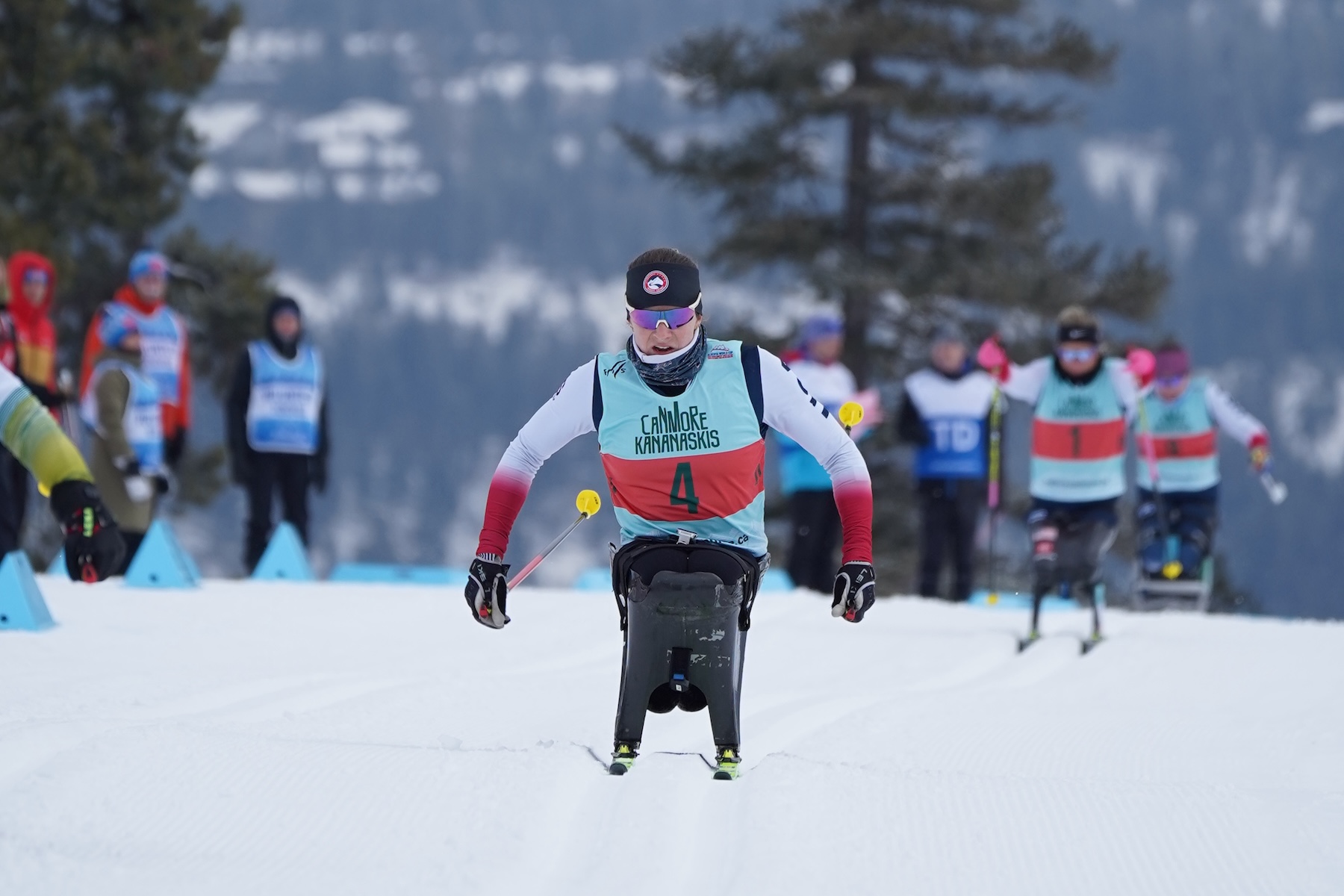
Sitting events were introduced at the Lillehammer 1994 Paralympic Winter Games.
Today, the major events internationally are the FIS Para World Cup, FIS Para World Championships and the Paralympic Winter Games. In 2026, the management of Para nordic returned to U.S. Ski & Snowboard from the United States Olympic and Paralympic Committee.
Classification provides a structure for Paralympic competition. The International Ski & Snowboard Federation (FIS) has adopted a universal classification code in order to facilitate the implementation of accurate, reliable, and credible sport-specific classification systems. The classification process determines who is eligible to compete in a Paralympic sport and it groups the eligible athletes in sport classes according to their activity limitation in a certain sport. For more information about Paralympic classification and the FIS Athlete Classification Code, please visit the FIS Classification Page.
FIS is the international federation for Paralympic Nordic Skiing. FIS is responsible for creating and implementing the rules and regulations that govern the Paralympic Nordic skiing classification system. For more information about Nordic Skiing's classification system, rules and regulations, please visit the FIS Para Nordic Skiing page.
All national classifications conducted in the United States fall under the governance of U.S. Ski & Snowboard. For more information about the national classification policies and procedures, please visit the U.S. Paralympics Classification Policies and Procedures Webpage.
The U.S. Paralympics Nordic Skiing National Database includes all athletes whose classification information is on file with either the FIS and/or U.S. Paralympics. Athletes who have been nationally or internationally classified as per the Code and/or the U.S. Paralympics Classification Policies and Procedures are included. Only athletes who have a current FIS License appear on the International Master list.
Athletes must hold a current FIS License and have the appropriate medical documentation to request international classification. The appropriate Visual Impairment or Physical Impairment Medical Diagnostics Form must be submitted six weeks prior to the date of the International Classification - failure to follow this procedure could result in cancellation of the classification appointment. Each form outlines the specific tests, x-rays, MRIs, etc. required for various impairments that should be provided as supporting documentation. The Medical Diagnostics Form and the supplemental documents must be completed by the athlete’s physician or ophthalmologist. For more information about how to apply for an FIS License, please visit the FIS Licensing webpage.
International Classification Forms
For a full list of International Classification Opportunities, please visit the FIS International Calendar Page.Please note that international classification slots are limited and allocated by FIS. There may be more athletes who request international classification than slots available. Athletes who meet the criteria and wish to request an international classification slot should contact the USOPC Classification Manager at [email protected]. International Classification Appointments must be requested at least six weeks prior to the date of the classification.
1. Athletes with visual impairments may obtain a national classification at any time during the year, and do not need to attend an event as part of the classification process. To obtain a National VI Classification, athletes must have the visual impairment medical diagnosis form completed by their ophthalmologist and returned to the USOPC Classification Manager along with supporting documentation related to the diagnosed eye condition as outlined on the medical diagnosis form at least four weeks prior to a competition they intend to compete at.
- National VI Classification form - Submit to USOPC Classification Manager at [email protected].
2. Once the forms are received by the USOPC, they are reviewed by a VI classifier, and the outcome will be communicated by the USOPC to the athlete. VI classification may require visual field testing, additional tests or information to complete classification which may delay the outcome. VI athletes must complete this process and be listed in the Classification Database to compete in events.
Other Documents