Breakpoints

No Retina
Retina
XS Screen (480px)
SM+ Screen
SM Screen (768px)
SM- Screen
MD+ Screen
MD Screen (992px)
MD- Screen
LG+ Screen
LG Screen (1200px)
LG- Screen
XL+ Screen (1600px)
Author Image
Coaches Education
Author Location
Park City, UT

Club Excellence Fall Summit 2020

By Coaches Education
September, 30 2020
Club Excellence Fall Summit 2020

U.S. Ski & Snowboard's Sports Education Department has partnered with the United States Olympic & Paralympic Committee (USOPC) to create a Club Excellence Fall Summit Webinar Series, which will take place every Wednesday evening in October beginning on October 7. 

U.S. Ski & Snowboard's development programs support the vision and mission to make the United States the "Best in the World" in Olympic skiing and snowboarding. But that wouldn't be possible without engaging and dedicated coaches at all levels who are out there working to support athletes striving to reach their full potential.

The Club Excellence 2020 Fall Summit will aim to spark insights into each topic's foundational principles by increasing awareness, providing practical examples from the ski and snowboard community, and engaging in reflective exercises. These sessions are designed to build upon one another, keeping participants focused on what is most important: coaching. This Fall Summit includes five sections of participant engagement for each webinar: Pre-Work, 60 Minute Presentation, Panel Discussion, Post-Work, and Survey.

 Register for all four Sessions: HERE

*Please note all four sessions will be recorded and available for viewing following the conclusion of each session. 

 Session Details: 

  • Session 1 - Coaching Philosophy: Your Why, Values, & Mission - October 7
    In order for you to have an influence on others, you need to know yourself. Your philosophy is an intentional guide to align your thinking, your values and your behaviors as a coach...
  • Session 2 - Planning: Intentions, Standards, Communication - October 14
    Success for our athletes tomorrow depends on how we prepare for it today. In these incredibly complex and uncertain times, identifying target themes, establishing standards of performance, and clearly communicating to staff and athletes is indispensable...
  • Session 3 - Coaching: Attention, Cueing, & Questioning - October 21
    Have you ever considered how YOUR performance in training influences your athlete’s learning? Enhancing how you start training, using intentional language to coach during training, and capturing the learning at the end of training will ignite your athlete’s skill development...
  • Session 4 - Review: Debrief, Feedback, & Next Steps - October 28
    One of the greatest losses in potential doesn’t happen before or during training, but at the very end.  Deliberately debriefing captures new information and insights to close the learning loop for the day, and carry progress into tomorrow...

Nordic Parent Webinar - Supporting Your Child in Nordic Skiing

By Coaches Education
January, 21 2015

Skiing is a big investment of time, energy and money for families. How can parents help maximize their children's enjoyment and potential in nordic skiing? How can they be sure their child is getting the best coaching, going to the right competitions, learning the right skills, using the right equipment and having fun all the while? The first step is learning more about nordic skiing and how parents can support their children. USSA is hosting live webinars where parents will learn about how young skiers should progress in their development, how best to manage competition days, and what opportunities exist for them. Parents will be able to ask questions to clarify their understanding. These web presentations are free and open to any nordic parent, simply click on the weblink below when the webinar is scheduled to start. If you are unable to attend the live presentation, the recordings will be posted here shortly after the webinar.

Sorry, you missed the live webinar, but we've posted the recorded webinar below.

Freestyle Parent Webinar - Supporting Your Skier

By Coaches Education
January, 21 2015

Skiing is a big investment of time, energy and money for families. How can parents help maximize their children's enjoyment and potential in freestyle skiing? How can they be sure their child is getting the best coaching, going to the right competitions, learning the right skills, using the right equipment and having fun all the while? The first step is learning more about freestyle skiing and how parents can support their children. USSA is hosting live webinars where parents will learn about how young skiers should progress in their development, how best to manage competition days, and what opportunities exist for them. Parents will be able to ask questions to clarify their understanding. These web presentations are free and open to any freestyle parent, simply click on the weblink below when the webinar is scheduled to start. If you are unable to attend the live presentation, the recordings will be posted here shortly after the webinar.

Sorry, you missed the live webinar, but you can view the recorded webinar below.

Snowboarding/Freeskiing Parent Webinar - Supporting Your Child in their Sport

By Coaches Education
January, 21 2015

Skiing and snowboarding are a big investment of time, energy and money for families. How can parents maximize their children's enjoyment and potential in skiing and snowboarding? How can they be sure their child is getting the best coaching, going to the right competitions, learning the right skills, using the right equipment and having fun all the while? The first step is learning more about the sport and how parents can support their children. USSA is hosting live webinars where parents will learn about how young skiers and riders should progress in their development, how best to manage competition days, and what opportunities exist for them. Parents will be able to ask questions to clarify their understanding. These web presentations are free and open to any freeskiing or snowboarding parent, simply click on the weblink below when the webinar is scheduled to start. If you are unable to attend the live presentation, the recordings will be posted here shortly after the webinar.

Sorry, you have missed the live webinar, but you may view the recording of the webinar below.

Alpine Parent Webinar - Supporting Your Ski Racer

By Coaches Education
January, 20 2015

Ski racing is a big investment of time, energy and money for families, and for that investment parents want results. But what results really matter? How can parents maximize their children's enjoyment and potential in alpine ski racing? How can they be sure their child is getting the best coaching, going to the right races, learning the right skills, using the right equipment and having fun all the while? The first step is learning more about the sport and how parents can support their children. USSA is hosting live webinars where parents will learn about how young ski racers should progress in their development, how best to manage competition days, and what opportunities exist in their region for them. Parents will be able to ask questions to clarify their understanding. These web presentations are free and open to any ski racing parent, simply click on the weblink below when the webinar is scheduled to start. If you are unable to attend the live presentation, the recordings will be posted here shortly after the webinar. Jon Nolting, USSA Sport Education Director, will lead discussion about ski parenting and long-term skier development and the respective regional competition managers will discuss regional opportunities.

Sorry, you have missed this year's live webinars. To view the recorded version, click on your region below.

Eastern Region

Rocky/Central Region

Western Region

USSA To Host Alpine Strength and Conditioning Symposium

By Coaches Education
April, 15 2014

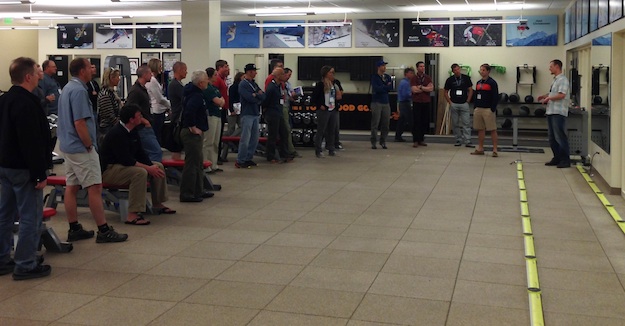
The USSA High Performance Department hosted an Alpine Strength and Conditioning Symposium on May 18-19, 2014, at the USSA Center of Excellence. The symposium included a full day of presentations and practical workshops led by the USSA strength and conditioning and sport medicine staff. Topics included alpine racing fitness and strength assessment, energy systems, periodization, training software and program analysis, effects of travel, warmup and recovery, injury prevention, return to ski protocols, injury prevention screening, recovery nutrition, core training and dynamic movements.

Summary papers were prepared by each presenter and can be downloaded here.

Your Voice Counts

By Coaches Education
April, 10 2014

The USSA needs your feedback as we move into spring planning. We are also working to collect valuable information that will help USSA and your clubs to provide the best possible programming for you as a USSA member. We're inviting USSA coaches and athletes along with their parents to take our on-line survey and questionaire. Even if you've filled out a USSA Member survey in the past, we encourage you to complete the survey this year as we've added some different questions that will provide very useful information. We're also asking for parents and athletes both to fill out the survey this year, with different questions for each.

Take the Parent and Athlete survey here

Take the Coach survey here

Thank you for your time! We will share summarized results from the survey on the USSA website and in the Excellence e-newsletter.

USSA Sport Education Coaches Tip of the Week: July 23 2013

By Coaches Education
July, 23 2013

Each week the USSA Sport Education Department will post a Coaches Tip of the Week.  The information will rotate through the ski and snowboard disciplines so check back each week to see the newest tip!

Rollerski Safety Tips
{This tip was adapted from a Roller Ski Safety article by Jon Brodhead, Craftsbury Nordic Center for NENSA: New England Nordic Ski Association}

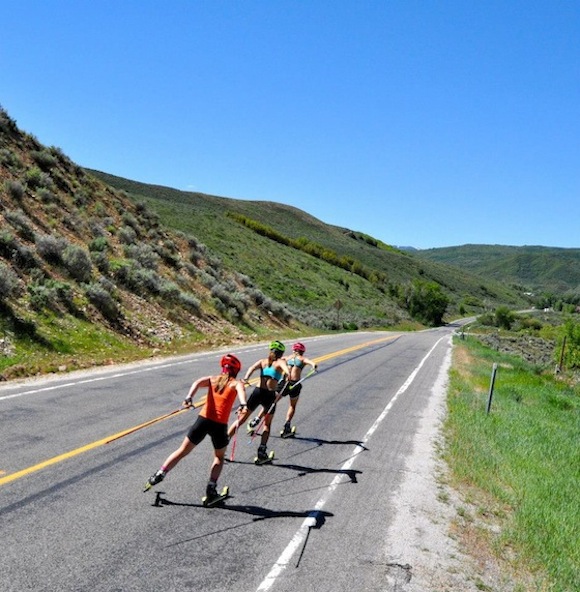
Summer is upon us and fall is just around the corner, we thought it would be a great time to remind everyone how important it is to be safe while training outside on the roads around the country. Here are a few things to keep in mind when you are out rollerskiing this summer.

Time
Think carefully about the time that you are training, rush hour and dawn/dusk, when you are least visible should be avoided. Consider adjusting your schedule if it's getting late in the day.

Location
Bike/rollerski paths are ideal, but if they are not available in your area choose roads with little traffic where drivers can clearly see you training. Avoid roads with many twists and sharp turns.

Gear
Bright clothing and helmets are a must. Reflective vests or clothing also help you to be as visible as possible to drivers. Absolutely no headphones should be worn during rollerskiing training on the road.

Group
Rollerskiing in a group makes you more visible to drivers but it is important to keep focused on the road and minimize distracting chatter. Groups can be helpful in alerting each other to traffic and rough roads. Ski single file and be courteous to drivers. You should ski with traffic on the right side of the road; however, some areas require rollerskiing on the left side, so know the laws within your particular area.

Rollerskiers should follow all traffic laws and be vigilant. When a car comes from the rear all skiers should stop skating and double pole single file as close to the edge of the pavement as possible. Do not begin skating again until you are sure there are no other cars coming from behind. Skiing in groups can help you be more visible but if you have a large group it's best to split up into smaller groups making it easier for cars to pass.

When you stop skiing, all of the athletes and the coach should step completely off the pavement.  

These tips are important to remember for rollerskiers, but apply to runners and cyclists as well.  Safety while training outside should be a top priority for all athletes and coaches.

PDF Copy of this week's tip

The full article by John Brodhead can be found here: https://www.nensa.net/training/roller_ski_safety.shtml


USSA Sport Education Coaches Tip of the Week: July 9 2013

By Coaches Education
July, 9 2013

Each week the USSA Sport Education Department will post a Coaches Tip of the Week.  The information will rotate through the ski and snowboard disciplines so check back each week to see the newest tip!

Course Setting in Skicross
{From the Freestyle/Freeskiing Competition Guide}

The Course
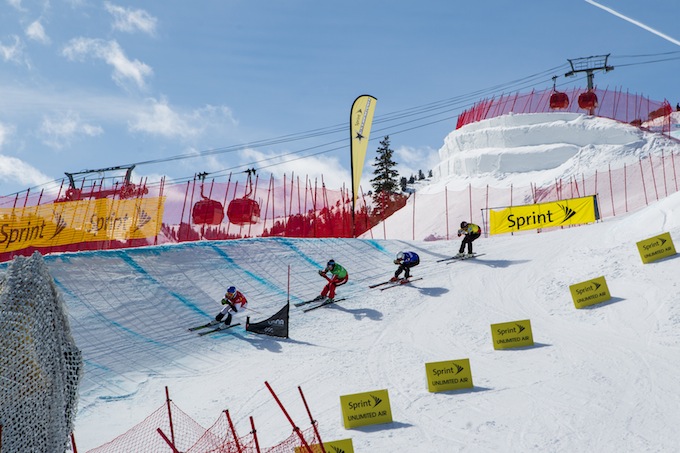
The slope should preferably be of a medium pitch with varied terrain.  The skicross slope must be a minimum of 30 m wide and the skicross track width for 4 to 6 skiers shall be no less than 5 meters in width.  Under certain conditions for short sections (50 meters or less) the course width may be a minimum of 20 meters. The ideal skicross course will allow for the construction of all or some of the following terrain features:

  • banks (crescent shaped),
  • double banks,
  • single, double, or triple jumps,
  • rollers,
  • offset rollers - (single, double, triple, etc.),
  • step-up jumps,
  • spines and double spines,
  • pro style jumps,
  • hip jumps,
  • table top jumps, and
  • medium or long GS type turns (when building a feature is not possible).

Other terrain features can be built but safety considerations must always be a priority. Gap jumps will not be permitted under any circumstances. The features should be designed so that competitors are attempting to gain speed and not having to break before each one.

Course preparation
The track should be closed to the public at least 24 hours before the training. Terrain features and jumps must be built with sufficient time so that the snow has been compacted to insure that they can be properly maintained during training and competition. The use of artificial means is permitted (salt, water, etc.).  

The setting of the gates must be done before the official inspection and should incorporate the skillful use of the terrain with the integration of terrain features and jumps into the setting. Minor adjustments in the setting may be necessary during the training to adjust the course for a smooth race line. Any changes made during training should be announced in the start area so all competitors and Team Captains are aware of such changes.

The total number of terrain features and jumps should be at the discretion of the course designer but will incorporate as many different possibilities as is practical. Blind jumps or terrain features where a skier is unable to see the landing from the take-off should be avoided. The course should be designed to separate the skiers as quickly as possible after the start (i.e. 3-5 rolls or other terrain features between the start and the first turn). These terrain features should be placed in a straight line from the start to the first turn. The first turn is usually the largest turn of the course, wide enough to accommodate all competitors at once. The start should be designed in such a way the competitors can gain the speed without using their ski poles or skating.

PDF Copy this Week's Tip
 

USSA Sport Education Coaches Tip of the Week: July 2 2013

By Coaches Education
July, 2 2013

Each week the USSA Sport Education Department will post a Coaches Tip of the Week.  The information will rotate through the ski and snowboard disciplines so check back each week to see the newest tip! 

Technical Concepts in Snowboard Coaching: Fundamental Movements
This except was taken from the USASA Level 100 Coaching Reference Guide

As a coach, it's your job to observe and identify fundamental movements to understand what goes well and what does not in each run.  Then you need to break these observations down into a simple message that either reinforces or corrects these movement patterns.  The concepts, discussed below: stance, alignment, fundamental movements, board performance, and time-intensity-duration give the coach a consistent and simplified framework to break down complex movements.

Stance and Balance
One of the most basic fundamental skills in snowboarding is a rider's stance on the board.  You can look at stance and balance as the first step in a chain of events that ends with the board performing in a desired way.  If that first link is ineffective, it'll throw the whole sequence out of whack.  Let's start with some basic balance principles that are common with most sports:

•    Weight distributed evenly on both feet
•    Knees slightly bent
•    Back straight
•    Abdomen and shoulder muscles relaxed
•    Head up and eyes looking straight ahead

Reference Alignment
Once effective stance is in place, we then need to make sure the rider is aligned with their equipment.  Shoulders and hips should be parallel to the snow, with center of mass over the turning edge.  Toe, knee, hip, and shoulders should be aligned into one plane.  These three principles make up the guiding principles that allow the coach a point of reference to evaluate effective versus ineffective movements in the rider.

Fundamental Movements
Once the rider is balanced and aligned, they must add movement to make the board perform an action.  This is accomplished by applying one, two, or a complex pattern of the following fundamental movements.

Flexion/Extension is when the muscles contact or expand causing the joint to close or open.  Joints in this movement are typically called hinge or saddle joints.  Hinge joints are one convex bone surface that work with the concave surface of another bone that limit the movement to flexion/extension.  Saddle joints are similarly constructed, but also allow for some rotational movements as well.  Flexion/extension movements can be very small (extending a finger) or very large (squatting).

Rotation is when the muscles and surrounding tissues cases a bone to rotate within a socket joint to create a circular movement.  Rotary movements can also be small (circling the hands around the wrist) or large (rotating the shoulders around the spine).  Rotary movements can also move in opposing directions.  For example, the shoulders can rotate clockwise as the hips rotate counter clockwise.  In snowboarding, we commonly call this the upper-lower body separation.  This movement has many critical applications to all disciplines of snowboarding.

Blending of Movements There are very few joints in the body that are exclusively flexion, extension, or rotation.  In fact, most movements in the body involve one or more joints.  It is likely that most movements will involve some elements of both movement types.

Upper-Lower Body Separation and Opposing Movements The ability to make movements with one part of the body while making opposing movements with another is an integral part of advanced snowboarding.  This type of complex movement is called body separation.  In developing riders, there tends to be very little separation movements.  As the rider develops more advanced skills, there are more complex combinations of separation movements.

Board Performance
Once a set of movements is applied to the balance and aligned rider, a specific action occurs.  At its most basic these movements apply pressure to the snowboard causing it to perform an action or task.  We can break these actions (performances) into four general categories.

Twist is when the rider uses a combination of rotation and flex/extension movement to flex the board along its long axis.

Tilt is when the rider applies flex or extension movement to one edge of the board causing it to tip onto its edge.

Pivot is primarily a rotary movement where the rider turns their body creating a point that the board rotates around.  Adding flex/extension movements can change the pivot point.

Flex is primarily a flex extension movement with the lower body that flexes the board between the tip and the tail.  These movements can be used to match changes in terrain or when jumping.  By applying opposing movement between the front and back foot, the rider can also create different flex patterns on the board.

Timing, Intensity and Duration (TID)
The final factor in examining movement patterns is the time involved in each action.  Timing is when the movement is applied, intensity is how much is applied, and duration is for how long the action or movement is performed.

Blending, Simultaneous and Overlapping Movement Patterns
Most complex movements are a blending of many movements and performances.  By varying the timing, intensity and duration of these actions, a rider can create incredibly complex chains of movements involving many layers of actions.

Fundamental Movements PDF